pain management in Hazlet NJ
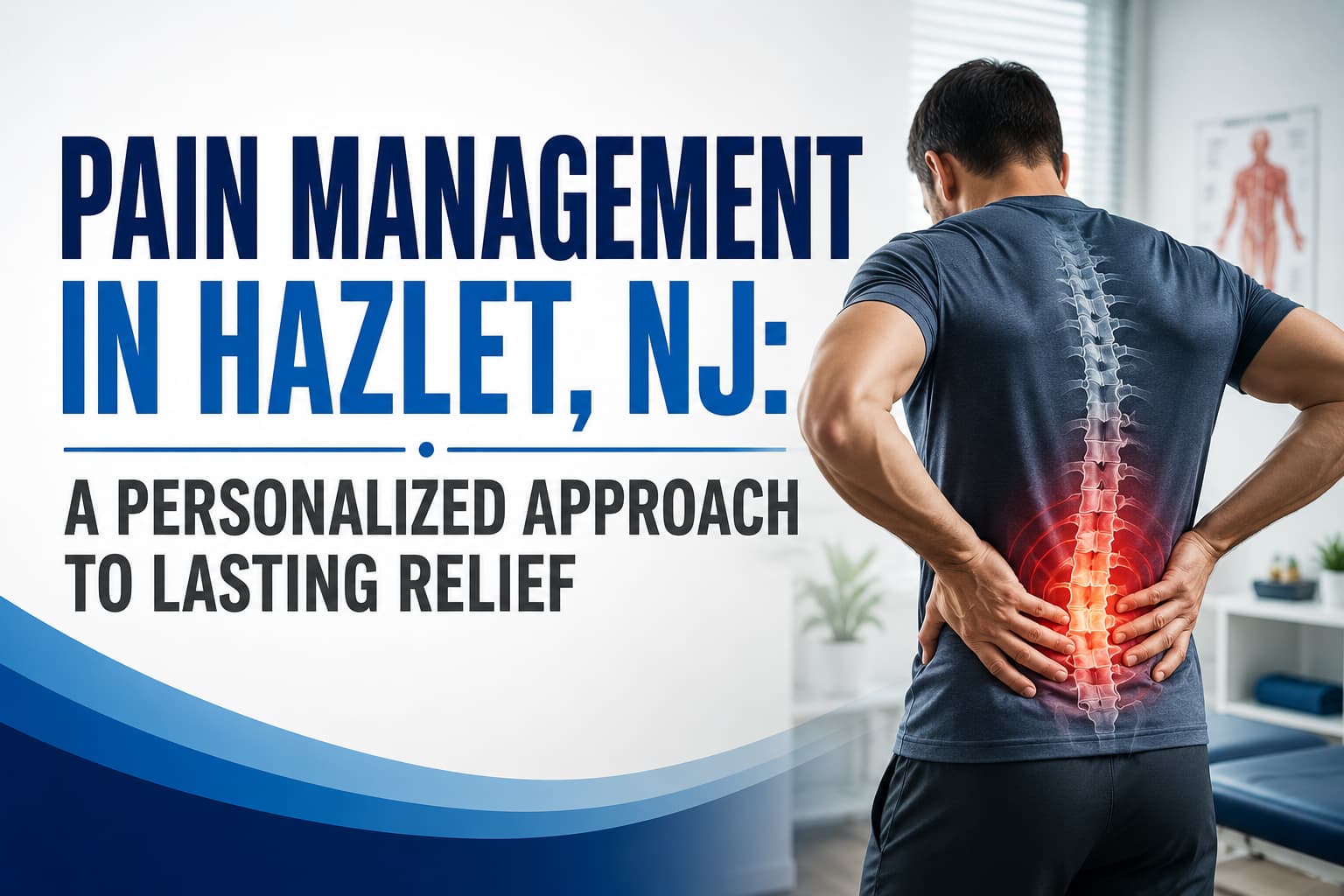
Living with persistent pain can affect much more than the part of your body that hurts. It can interfere with your ability to work, exercise, sleep, drive, spend time with family, and enjoy everyday activities. When pain continues for weeks or months, simply trying to cover up the symptoms may not be enough.
Effective pain management starts by identifying the possible source of pain and developing an individualized treatment plan designed to improve both comfort and function. According to the National Institute of Neurological Disorders and Stroke (NINDS), pain can have a significant impact on daily activities and quality of life, highlighting the importance of addressing persistent pain appropriately.
Depending on the condition, a personalized pain management approach may involve a combination of physical therapy, chiropractic care, acupuncture, interventional pain management, regenerative medicine, exercise, and other conservative or medical treatments.
At Airport Plaza Spine & Wellness in Hazlet, NJ, patients have access to multiple disciplines under one roof, allowing treatment to be tailored to the individual rather than relying on a one-size-fits-all approach.
What Is Pain Management?
Pain management is a medical approach focused on evaluating, diagnosing, treating, and managing acute or chronic pain.
The goal isn’t necessarily to find one treatment that makes every symptom disappear immediately. A more practical goal is to determine why you hurt, what factors are contributing to the problem, and which treatments may help you move and function better.
This distinction is especially important for chronic pain.
The CDC recommends maximizing appropriate nonopioid and nonpharmacologic therapies for subacute and chronic pain. Depending on the patient’s diagnosis, these approaches can include exercise therapy, physical therapy, manual therapies, spinal manipulation, acupuncture, psychological therapies, and multidisciplinary rehabilitation.
Acute Pain vs. Chronic Pain
Not every type of pain should be treated the same way.
| Type of Pain | Typical Characteristics | Examples |
|---|---|---|
| Acute Pain | Begins suddenly and is often associated with an injury or specific event | Sports injury, muscle strain, accident |
| Chronic Pain | Persists for an extended period and may continue after an initial injury | Persistent back, neck or joint pain |
| Neuropathic Pain | Associated with irritation or damage involving nerves | Burning, tingling, numbness, shooting pain |
| Musculoskeletal Pain | Involves muscles, joints, ligaments, tendons or bones | Back, shoulder, knee or neck pain |
Understanding the type and potential source of pain can help clinicians determine which treatment strategies deserve consideration.
Common Conditions That May Require Pain Management
Pain can originate from muscles, joints, nerves, discs, tendons, ligaments, or other structures.
People may seek professional pain management for conditions and symptoms such as:
- Chronic lower back pain
- Neck pain
- Shoulder pain
- Knee pain
- Hip pain
- Joint pain and stiffness
- Sciatica-type symptoms
- Neuropathy and nerve discomfort
- Sports injuries
- Work-related injuries
- Pain following an automobile accident
- Musculoskeletal injuries
- Certain forms of headache
- Pain following surgery
- Limited mobility associated with pain
Airport Plaza Spine & Wellness specifically provides care for conditions including back and neck pain, joint and limb pain, lumbar spinal stenosis, and neuropathy.
Why Finding the Source of Pain Matters
One of the biggest mistakes people can make with persistent pain is focusing exclusively on where it hurts.
The location of pain doesn’t always tell the complete story.
For example, discomfort traveling into a leg may involve structures in the lower back or irritation involving a nerve. Shoulder discomfort could involve muscles, tendons, joints, or other structures. Persistent back pain may have several contributing factors.
That is why an appropriate evaluation is so important.
A pain management evaluation may consider factors such as:
- When the pain started
- Where the pain occurs
- Whether it travels to another area
- Which movements make it worse
- Previous injuries
- Muscle strength
- Range of motion
- Neurological symptoms
- Previous treatments
- Medical history
- Imaging or diagnostic testing when clinically appropriate
The objective is to develop a treatment strategy based on the patient’s actual condition rather than treating every person with the same protocol.
The Advantage of a Multidisciplinary Approach to Pain
Pain is often more complicated than a single injured muscle or joint.
For some patients, combining appropriate treatments can make more sense than repeatedly relying on only one modality.
Airport Plaza Spine & Wellness offers several services within the same multidisciplinary practice, including chiropractic care, physical therapy, acupuncture, interventional pain management, regenerative medicine, post-surgical rehabilitation, spinal decompression, low-level laser therapy and electrodiagnostic testing.
This makes it possible for clinicians to consider different treatment strategies based on the patient’s diagnosis, needs, and response to care.
The concept also aligns with broader pain-management guidance. Multimodal and multidisciplinary approaches can be useful for some patients with persistent pain, particularly when a single treatment hasn’t produced adequate improvement.
Physical Therapy for Pain Management
Physical therapy isn’t simply about performing a few stretches.
A rehabilitation program can be designed to address mobility, strength, flexibility, movement patterns and functional limitations associated with an injury or painful condition.
Depending on the diagnosis, treatment may incorporate therapeutic exercise, mobility work, strengthening, manual techniques, and a progressive return to normal activity.
The objective is not just reducing discomfort.
It’s helping the patient move and function more effectively.
That matters because reducing pain while ignoring weakness, limited mobility or movement problems may leave important contributors to the problem unaddressed.
Chiropractic Care
Chiropractic care may be incorporated into a conservative treatment strategy for certain musculoskeletal conditions.
Depending on the patient’s diagnosis and clinical presentation, treatment may focus on mobility, spinal or joint function, and musculoskeletal mechanics.
Airport Plaza Spine & Wellness combines chiropractic services with other disciplines, allowing patients who require additional rehabilitation or pain-management strategies to have those options available within the practice.
Acupuncture and Pain Management
Acupuncture may also be considered as part of a broader pain-management strategy for certain conditions.
Rather than viewing acupuncture as a replacement for every other treatment, it may be more useful to think of it as one possible component of an individualized treatment plan.
The CDC includes acupuncture among nonpharmacologic options that can be considered for certain types of chronic pain.
Airport Plaza Spine & Wellness offers acupuncture alongside chiropractic care, physical therapy, and pain-management services.
Interventional Pain Management
Some patients continue to experience significant pain despite conservative care.
In appropriate cases, a qualified provider may consider interventional pain-management options.
These treatments should be selected according to the patient’s diagnosis, symptoms, medical history, and clinical findings—not simply because a patient reports pain.
Airport Plaza Spine & Wellness describes its pain-management philosophy as individualized and multidisciplinary, recognizing that each person’s experience with pain is different.
Regenerative Medicine
Regenerative medicine is another area sometimes considered for selected musculoskeletal problems.
However, this is an area where patients should be especially cautious about exaggerated claims.
No responsible provider should promise that a regenerative treatment can automatically “regrow” damaged tissue or cure every source of joint pain. Whether a particular procedure is appropriate depends on the diagnosis, available evidence, patient-specific factors, and the particular treatment being considered.
Airport Plaza Spine & Wellness lists regenerative medicine among the treatments available at its Hazlet practice.
A consultation can help determine whether such an option deserves consideration for a particular condition.
Pain Management Should Be About Function, Not Just a Pain Score
Imagine two patients who both describe their pain as 7 out of 10.
One cannot comfortably walk around the grocery store.
The other can walk normally but cannot lift something overhead without shoulder pain.
The number is identical, but their problems aren’t.
That’s why a useful pain-management plan should look beyond the pain scale.
Progress may also involve questions such as:
Can you walk farther?
Can you sleep more comfortably?
Can you return to work?
Can you exercise again?
Has your range of motion improved?
Can you perform everyday activities that were previously difficult?
Improving function can be an important measure of whether treatment is actually helping.
What Happens at a Pain Management Evaluation?
Every patient’s situation is different, but a typical process may look something like this:
1. Identify the problem
The provider reviews your symptoms, history, previous injuries, treatments, and activities that aggravate or relieve the pain.
2. Perform an appropriate examination
Mobility, strength, neurological findings and other relevant factors may be evaluated depending on the condition.
3. Determine whether additional testing is necessary
Imaging, electrodiagnostic testing or other diagnostic procedures may be considered when medically appropriate.
4. Develop an individualized treatment strategy
The recommended treatment depends on the diagnosis rather than simply the location of the pain.
5. Monitor pain and function
Your response to treatment can be evaluated over time.
6. Adjust the plan when necessary
If progress isn’t occurring as expected, the treatment strategy may need to change.
When Should You See a Pain Management Specialist?
Consider scheduling an evaluation when pain:
- Persists or repeatedly returns
- Interferes with work or everyday activities
- Makes sleeping difficult
- Limits exercise or physical activity
- Causes persistent weakness, numbness or tingling
- Continues after an injury
- Hasn’t responded adequately to previous treatment
- Is progressively affecting mobility or quality of life
New or severe symptoms can sometimes require urgent medical evaluation. Sudden weakness, loss of bowel or bladder control, significant trauma, chest pain, difficulty breathing, or other severe or rapidly worsening symptoms shouldn’t be treated as routine musculoskeletal pain.
Frequently Asked Questions About Pain Management
What is the best treatment for chronic pain?
There isn’t one treatment that is best for every patient. Treatment should depend on the cause of the pain, medical history, symptoms, functional limitations, and response to previous care. For many conditions, a combination of appropriate therapies may be considered.
Do I need surgery for chronic back or joint pain?
Not necessarily. Many musculoskeletal conditions can initially be evaluated for conservative or nonsurgical treatment. However, certain injuries and medical conditions may require surgical consultation. The appropriate path depends on the diagnosis.
Can physical therapy help chronic pain?
Physical therapy can be an important component of treatment for many musculoskeletal pain conditions. Exercise therapy is among the nonpharmacologic approaches recommended for various forms of chronic pain.
Can chiropractic care and physical therapy be used together?
For appropriate patients, different disciplines may be incorporated into a coordinated treatment plan. Airport Plaza Spine & Wellness provides chiropractic care and physical therapy within the same multidisciplinary practice.
Does pain management always involve medication?
No. Pain management can include nonpharmacologic, nonopioid, rehabilitative, and interventional approaches depending on the patient’s condition. For subacute and chronic pain, CDC guidance favors maximizing appropriate nonopioid and nonpharmacologic therapies.
Pain Management in Hazlet, NJ
Living with pain shouldn’t mean endlessly trying treatments without understanding what you’re trying to accomplish.
A better starting point is a thorough evaluation followed by a treatment strategy based on your condition, symptoms, functional limitations, and goals.
At Airport Plaza Spine & Wellness, patients can access pain management alongside chiropractic care, physical therapy, acupuncture and other musculoskeletal treatment options in one Hazlet location. The multidisciplinary model allows care to be individualized according to each patient’s needs.
If back pain, neck pain, joint discomfort, an injury, or another persistent pain condition is interfering with your daily life, consider scheduling an evaluation to better understand the cause and available treatment options.
Contact Airport Plaza Spine & Wellness
Airport Plaza Spine & Wellness
Office Location:
1354 Route 36
Hazlet, NJ 07730
Phone:
732-END-PAIN
(732) 264-2233
Website:
airportplazaspineandwellness.com