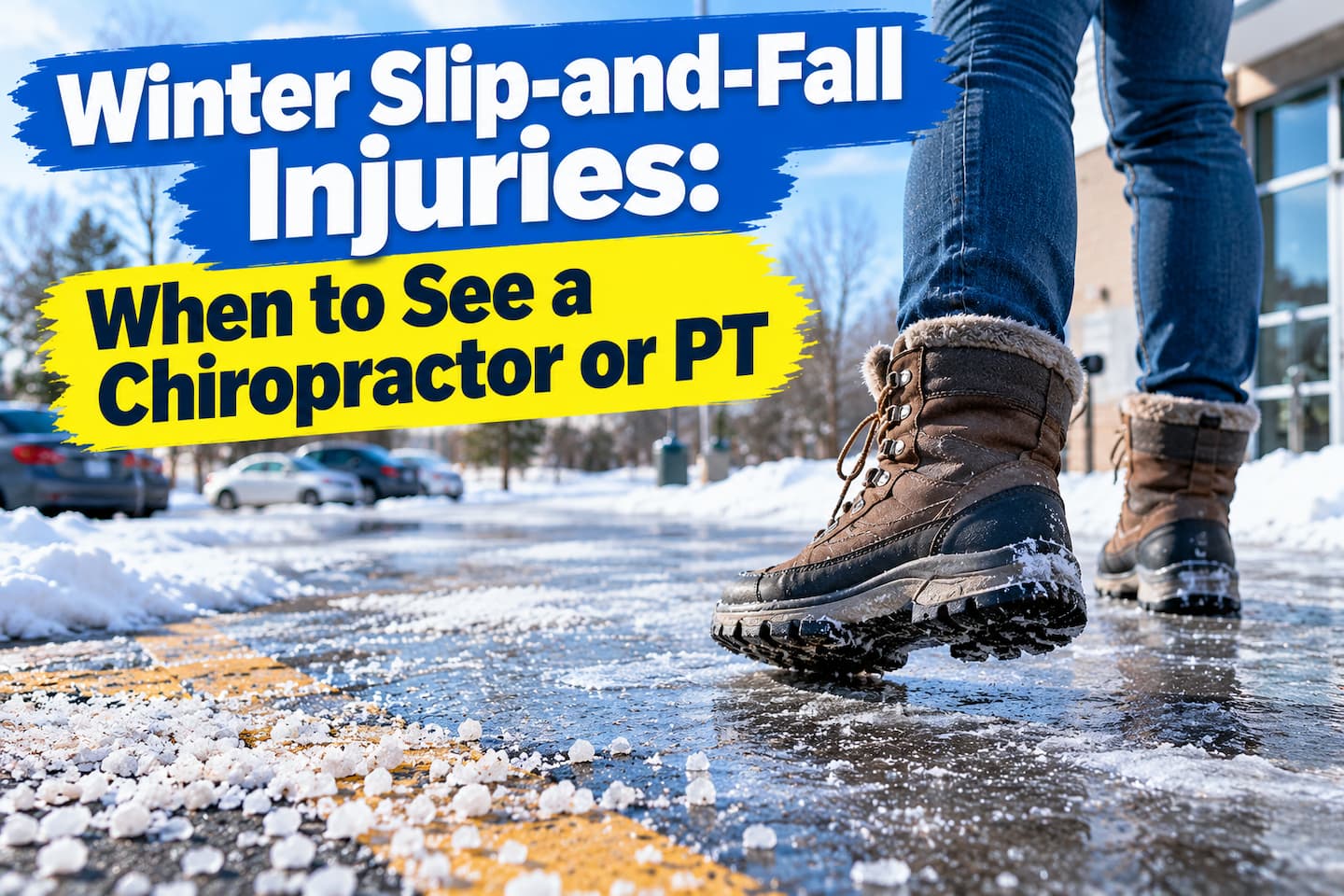
When the first freeze hits Monmouth County, sidewalks in Hazlet, parking lots along Route 36 and driveways from Keyport to Middletown can turn slick overnight. Slip and fall injuries are one of the most common reasons people come in sore and worried during the winter months. Some falls lead to nothing more than a bruise. Others cause a back strain, a wrist injury, a hip injury or a head injury that needs emergency care. This guide explains what to watch for, what to do right after a fall and when a chiropractic or physical therapy evaluation may make sense.
Why Winter Falls Matter, Especially for Older Adults
Slip and fall injuries are not just an icy-day inconvenience. According to the CDC, falls are the leading cause of injury for adults ages 65 and older, and over 14 million older adults, about 1 in 4, report falling every year. The CDC also reports that the age-adjusted fall death rate for older adults rose 21% between 2018 and 2024. Winter conditions add one more layer of risk on top of balance changes, medications and vision problems.
That does not mean only older adults suffer slip and fall injuries. Commuters crossing a frozen lot at the Hazlet train station, parents carrying kids to the car and anyone hurrying in the dark can go down hard.
Common Slip and Fall Injuries in Winter
Back and neck strain
When your feet slide out, your body twists and braces in a split second. Muscles and ligaments in the lower back and neck can be strained, and pain and stiffness often show up later that day or the next morning. A sudden jolt can also irritate the joints of the spine.
Wrist injuries
Most people reach out to catch themselves. The American Academy of Orthopaedic Surgeons (AAOS) notes that a scaphoid fracture usually happens when you fall onto an outstretched hand, and that with some of these fractures the pain is not severe and may be mistaken for a sprain. Wrist pain that does not go away within a day of the injury may be a sign of a fracture and should be checked.
Hip injuries
According to the AAOS, most hip fractures result from low-energy falls in older people with weakened bone. With most hip fractures, a person cannot stand, bear weight or move the upper part of the leg, and the injured leg may look shorter or turned. This is an emergency, not a wait-and-see injury.
Head injuries
Falling backward on ice can mean the back of the head hits the pavement. Concussion symptoms can include headache, dizziness, balance problems, sensitivity to light or noise, trouble concentrating and changes in sleep. Symptoms do not always appear right away.
Go to the ER First: Red Flags After a Fall
A chiropractor or physical therapist is not the first stop for every case of slip and fall injuries. Call 911 or go to the nearest emergency department if any of the following happen:
- Head injury warning signs: the CDC lists danger signs such as a headache that gets worse and does not go away, repeated vomiting, slurred speech, unusual confusion or agitation, one pupil larger than the other, seizures, or loss of consciousness with increasing drowsiness. You can read the full list on the CDC concussion signs and symptoms page.
- You cannot bear weight on a leg, or you cannot stand up after the fall.
- Visible deformity: a limb looks bent, twisted or shortened, or there is a bone sticking out.
- Numbness, tingling or weakness that spreads into an arm or leg.
- Loss of bladder or bowel control, which MedlinePlus lists as a possible sign of spinal injury.
- You take a blood thinner and hit your head. MedlinePlus lists blood-thinning medicines and falls among the risk factors for bleeding around the brain (subdural hematoma), and notes that in older adults this can follow a minor head injury and go unnoticed for days. Anyone on an anticoagulant who strikes their head should get checked promptly, even if they feel fine.
If you suspect a neck or back injury in someone else, MedlinePlus advises not to move the person unless there is urgent danger, and to keep them still until help arrives.
What to Do Right After a Fall
- Pause before getting up. Check yourself for pain, numbness and dizziness before you try to stand.
- Get up slowly, rolling to your side and using a sturdy car, railing or person for support.
- Get out of the cold and into a warm, safe place.
- Tell someone what happened, especially if you live alone or hit your head.
- Write it down. Note where and when you fell, what hurts and how it changes over the next 24 to 48 hours. This helps any provider you see later.
- Watch for delayed symptoms, including new headache, stiffness, radiating pain or tingling.
When a Chiropractor or Physical Therapist May Help
Once serious slip and fall injuries such as fractures, head injuries and nerve emergencies have been ruled out, many people are left with lingering pain, stiffness or a fear of falling again. That is where a chiropractic or physical therapy evaluation may be useful. Consider scheduling one if:
- Back or neck pain is still limiting you several days after the fall.
- You feel stiff turning your head, bending or getting out of a car.
- You have been cleared of a fracture but your wrist, shoulder or hip still feels weak.
- Your balance feels off, or you have started avoiding walking outside.
At Airport Plaza Spine & Wellness, an evaluation can include a history and exam, and in-house digital X-rays when appropriate. Depending on what we find, a plan may include chiropractic care, including Chiropractic BioPhysics (CBP), physical therapy, and other options offered at the practice. For older patients, our post on chiropractic care for seniors explains what gentle care can look like. If balance and walking are the main concerns, gait training is one physical therapy approach that may help some patients move with more confidence. Every patient is different and results vary.
If a fall has already been treated in the ER or by your primary care doctor, bring your discharge papers or imaging results to your visit so care can build on what has already been done.
How to Prevent Slip and Fall Injuries on Icy Monmouth County Sidewalks and Parking Lots
OSHA’s winter weather guidance offers simple steps that apply at work and at home. Its winter weather hazards page recommends:
- Clear walkways quickly. Remove snow and ice and spread deicer as soon as possible after a storm.
- Wear the right footwear. Insulated, water-resistant boots with good rubber treads, or rubber over-shoes with good treads, give better grip.
- Walk differently on ice. Take short steps and walk at a slower pace so you can react to a change in traction.
A few local habits help too. Park closer to cart corrals and store entrances in Hazlet and Holmdel shopping centers, keep a bag of salt or sand in your car trunk, use handrails on steps, and keep your hands free instead of in your pockets. Shoveling is another winter risk for your back, so review our snow shoveling tips before the first storm, and see our guide to exercising safely in cold weather to keep muscles warm and flexible.
Frequently Asked Questions
Should I see a chiropractor right after I fall on ice?
Not before ruling out emergencies. If you hit your head, cannot bear weight, see a deformity, or have numbness, weakness or loss of bladder or bowel control, go to the ER first. Once serious injuries are ruled out, a chiropractic or physical therapy evaluation may help with lingering pain or stiffness.
How long after a fall can pain show up?
With slip and fall injuries, muscle soreness and stiffness often appear later the same day or the next morning. Some head injury symptoms can also be delayed, so keep watching for changes over the following days.
Is a sore wrist after a fall just a sprain?
Not always. The AAOS notes that some wrist fractures cause only mild pain and may be mistaken for a sprain. Wrist pain that lasts more than a day after a fall should be checked by a medical provider.
I take a blood thinner and bumped my head but feel fine. What should I do?
Get checked promptly by a medical provider or emergency department. People on blood-thinning medicines have a higher risk of bleeding around the brain, and symptoms can appear days later.
Can physical therapy help prevent another fall?
For some patients, yes. Physical therapy can work on strength, balance and walking mechanics. Results vary, and a provider can tell you whether it is a good fit for you.
Schedule an Evaluation in Hazlet After a Winter Fall
If you have been cleared of serious slip and fall injuries but are still dealing with pain, stiffness or balance worries after a fall, Airport Plaza Spine & Wellness can help you understand your options. Call us at (732) 264-2233 or visit us at 1354 Route 36, Hazlet, NJ 07730. We see patients from Hazlet, Keyport, Matawan, Middletown, Holmdel, Keansburg, Aberdeen and nearby towns. You can also reach us through our contact page. If you have any emergency warning signs, call 911 first.